
So let’s talk about the Fives in Tarot today – even (or especially) if you don’t like them very much. They are the first hurdle (or threshold) to pass in the numerical sequence of the tarot cards. I strongly believe that this is the point where most people already give up. But not you, right?
Understanding the Hierophant in Tarot through a storyline
I never liked the Fives in Tarot, including the Hierophant (or High Priest) – he’s also a Five, keep that in mind. It’s nothing personal, I just never managed to interpret him properly, to grasp his general meaning in a way that makes sense to me. Yes, of course you can read guidebooks and websites about Tarot and you’ll always find a keyword or sentence that fits your situation or question. But that’s not what I mean; I think to read Tarot in a kind of »fluid« way, you need to understand the card. Know it like you know the people in your life. Only then can you interpret their answers and behaviors in a coherent way – do you know what I mean?
So the hierophant was always like some weirdo who sometimes told me one thing and sometimes another; and because I didn’t know him, wasn’t familiar with him, I couldn’t decipher his presence in a cohesive way.
Here’s the video on the Fives in Tarot:
Is he a kind of Pope? Just authorities in general? Traditions? Initiation into secret or sacred mysteries? I never got it.
Now, when I worked on the concept for the Creative Tarot, I tried to strip away all the mystical and magical and focus simply on the facts of the cards. They have their suits which correspond with the elements (the elements fire, water, air and earth are pretty real) and they have their numbers, no doubt about that. So I tried to take the numerical sequence, create a story of it with Joseph Campbell’s Monomyth in mind. After all, it’s always said that the Major Arcana depict the »Hero’s Journey« of the Fool right?
The logic (and the story) goes like this:
Once upon a time, there was a joyful Fool – and he would have lived and juggled happily ever after, BUT one day a Magician turns up and the Fool receives his call to Adventure, to use Campbell’s term. So the Fool sets out, has a disturbing encounter with the High Priestess (who never asks us to set out, but to turn inward); he feels rather low, but the friendly Empress appears, helping him to make the desired progress on his journey. With the Emperor everything becomes nice and stable and settled in, a new status quo is reached, all’s well that ends well.
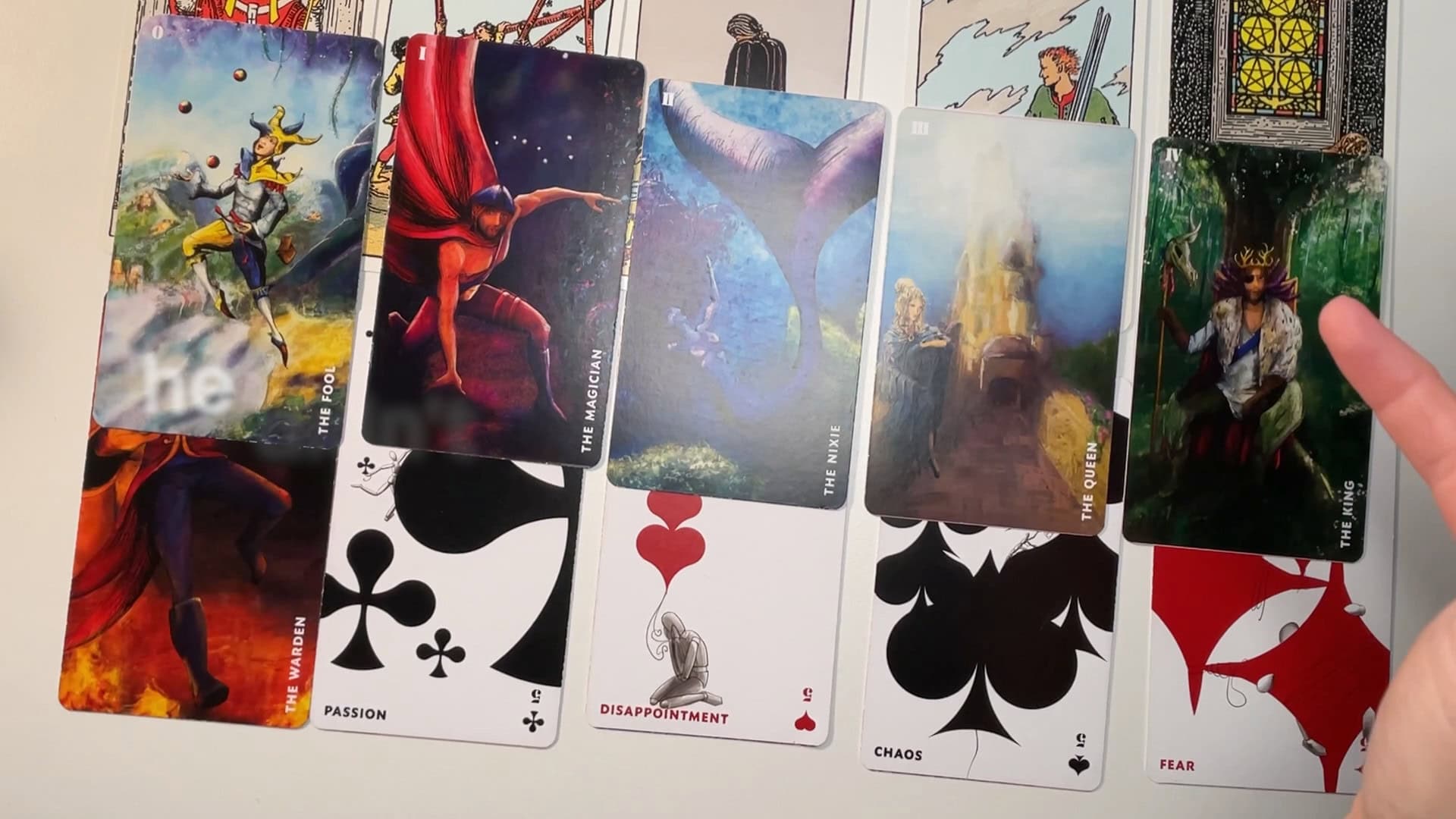
The Hero’s Journey
Think about it: This actually IS where it ends for a lot of people. It’s the tale of life that we were told over and over again: We start as a Fool (child), we get our call to adventure and set out (Magician; school, professional training etc.), we find love (Number 2, High Priestess, emotions), we bring a child into the world (Number 3, progress, fertility, Empress) – and life is done. We are settled in. Might build a house or plant a tree for good measure, get married, stay at the very same job till we retire (Number 4, stability, safety, Emperor).
Nothing wrong with that, it’s just not the journey of a hero or heroine. So what’s next?
Out of the usual Hierophant interpretations I’d go for »breaking with traditions«. You might cheat on your spouse or quit that boring job. But that’s more kind of the Hierophant reversed? And I don’t do reversed. And it’s not very heroic either.
So I defined the theme of the number 5 as a hurdle or conflict in general. In Campbell’s terms: The First Threshold.
We all have to face it somehow; not necessarily as a conflict with traditions or institutions or even religion.
Let’s say you are not happy anymore with the job you’ve settled into so nicely. Or you are made redundant. That’s a hurdle. You’ll probably have to deal with a lot of uncertainty. Maybe you need another qualification and therefore have to pass the actual hurdle of a formal test.
If your marriage doesn’t work out it might be a different feeling, but it’s still a hurdle, a conflict, a challenge. So do you stay in an unhappy (but at least familiar and predictable) relationship – or do you accept the challenge, split up and start afresh?
That’s just two examples when we look at the most common big themes of life. Of course there are many more hurdles, conflicts, challenges, problems in day to day life.
The Hierophant & his Pip Cards
Now the Major Arcanum or Trump card is the archetype of the number’s theme. You could say the Hierophant is the personified problem. So I renamed him to get rid of the religious priestly touch: The Warden.
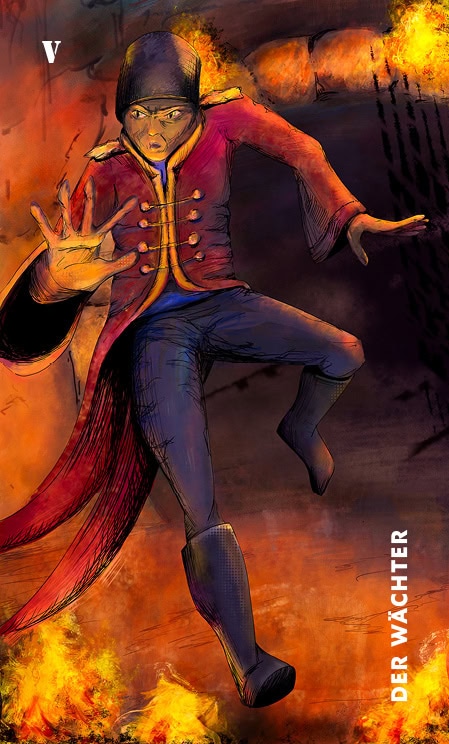
When you are facing the warden of something, there’s a conflict. He won’t let you pass or won’t let you in or out, he guards something, you might have to prove yourself in some way, pass a test of some kind – or just make use of your skills and resources to solve the situation and cross the figurative threshold.
The four pip cards (Five of Wands, Five of Cups, Five of Swords and Five of Coins/Pentacles) are the different and distinct ways in which the suits/elements deal with the »Warden« or how they react to him. I’m explaining my thought process in this blog post, but try it for yourself:
There’s a conflict, a warden who tells you you can’t pass this threshold. How do the elements deal with it? Take a moment to find your own answers before you read mine below.
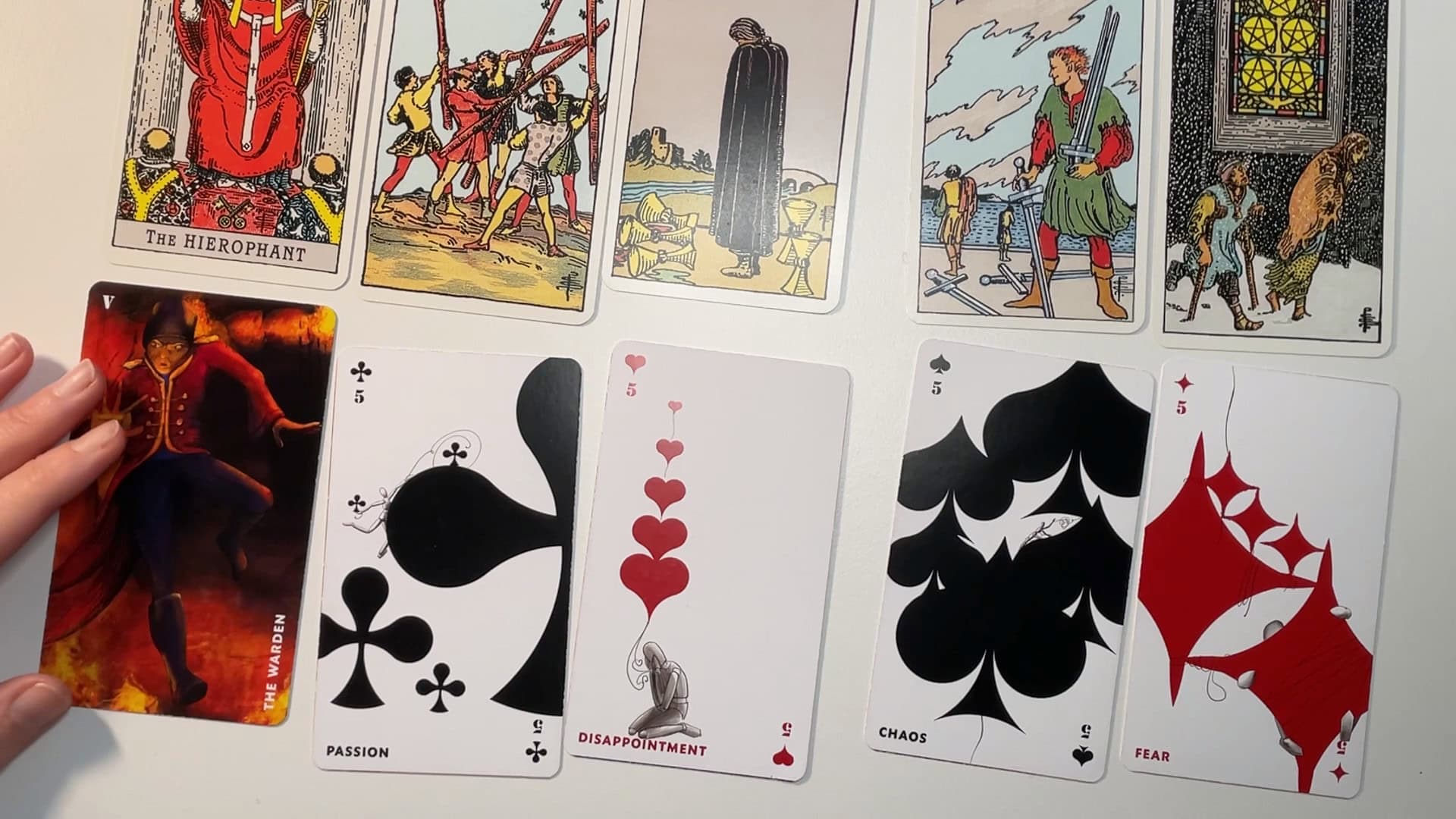
FIRE: The Wands (Clubs) are fiery and hot headed. I think they just don’t accept a No. When you tell them they can’t do anything, they’ll answer »Bet I can? Watch me!« It doesn’t hold them back, it just sparks their ambition and willpower. Even if they REALLY can’t do it. They might even need the challenge to get going in the first place. You know what I mean?
WATER: The Cups (Hearts) are all feeling and emotional, intuitive and dreamy. Where the Wands might even need a bit of conflict to get their act together, the Cups are immediately disheartened (what a great word for it!). They’ll smile politely at the warden, say »Okay. But that’s not very nice of you! I really deserve to pass!« The warden shrugs, the Cups blink away some tears and sulk for the rest of the century. Drama queens. The only conflicts they like are those that they created themselves.
AIR: The Swords (Spades) are problem solvers by nature. The universe is logical, so everything is explainable and therefore solvable, figure-outable. Even the things that normal people never wanted to figure out. So like the Wands they want and need the challenge – what they perceive as an unpleasant conflict, is chaos. The things that are not in order, that seem illogical or even irrational. Think of a Rain Man like stereotypical autistic person.
EARTH: The Pentacles (Diamonds) are the doers of the deck. You might say they’ll just start tinkering with the problem until it’s solved – but I think that really takes some Sword- or Wand energy. I imagine them to be rather tender and fragile and not very inspired on their own (not at this stage at least). So I think they just react with fear. They can’t keep going or trying, because they are scared to brake something. Fight is not their thing, so they’ll retreat to flight or freeze.
We all know situations where we know what needs to be DONE to resolve a conflict – but we don’t bloody do it. Call it procrastination or give it any other fancy term. What it means is: Fear.
I had originally named this card »Resources« – it means the same; fear is just what we experience when we suspect that our resources are not good or plenty enough.
Before I tell you the keywords of the cards, let’s just state that none of these four reactions is good or bad, right or wrong. They are just different and valid strategies to react to a problem. None of them will usually solve it; it always needs a mix of the elements.
The Passion of the Five of Wands might just be an impulsive and very noisy barking up the wrong tree. They accept the challenge for the sake of it and for the adrenaline. It might even be stupid or outright dangerous to throw yourself full speed into the problem with the firm believe that you’ll triumph if you just try hard enough.
The Disappointment of the Five of Cups certainly doesn’t lead anywhere on it’s own, but to DIS-appoint yourself from something or someone is usually a very necessary step before we can let go and move on. We are allowed to grief and I really believe that we have to acknowledge our grief – even if it is just for our own lost hopes. They are a part of us.
The Chaos of the Five of Swords feels similar to the Tower; it calls for a new order – and the Swords WILL order it. Purely rational, without passion, without heart, without any action; without the other elements they will just analyze the chaos, draw a logical and accurate map of the labyrinth they are lost in – and then stay right where they are with the map tucked under their pillow.
The Fear of the Five of Pentacles can be just the cautious option that’s right for the situation. We don’t always have to act, we are allowed to simply observe, wait. Just not forever. Fear is a totally valid feeling when we are confronted with a figurative warden, a new or unpredictable situation. Just like the disappointment of the Five of Cups it wants to be acknowledged, not overlooked and hidden out of shame.
Every Hurdle is a Chance to Grow!
And I think that’s the thing with the unpopular Fives in Tarot. They carry real lessons for us. They are the passageways where we can grow and develop. Imagine a life without hurdles, as stated in the picture perfect Fifties’ housewife life story above. There is no room to grow, no chance to develop into anything more, no path to become (except a fifties’ housewife and if that is what you want to become, that’s fine too).
Everything that you »become« in life requires some kinds of hurdles to take and tests to pass. Even »just« becoming a kind of independent adult and nothing more requires you to move out, get an apartment and learn how to operate the microwave.
If you want to become skilled at something or even reach some kind of mastery, no matter if it is a creative craft, a profession, sports, a musical instrument or running your own business – you will face hurdles. You will try, you will fail, you will try again, adapt, practice, figure stuff out, learn – and experience all the four elements’ reactions, Passion, Disappointment, Chaos and Fear over and over again. And you have the chance to become better at dealing with them along the way.
We need the Fives in our lives. We certainly usually don’t ask for them; we’d prefer things to be smooth and easy, we want to be lucky, have good stuff happening to us, of course. But the chances to grow only arrive in the difficult situations. All those heroic character traits like bravery, wisdom, loyalty, strength, fairness … whatever virtue you want to name … can only be acquired and shown, lived, when there is a conflict that requires these virtues.
You don’t need bravery or courage when you are having a cosy evening on the couch, you need it when you face a dragon. You don’t ask for someone’s loyalty when everything is fine and rosy – you’ll ask for it when you are in need of a friend, when you are down.
You might want to keep the virtues in mind – some will reappear later on the higher cards!
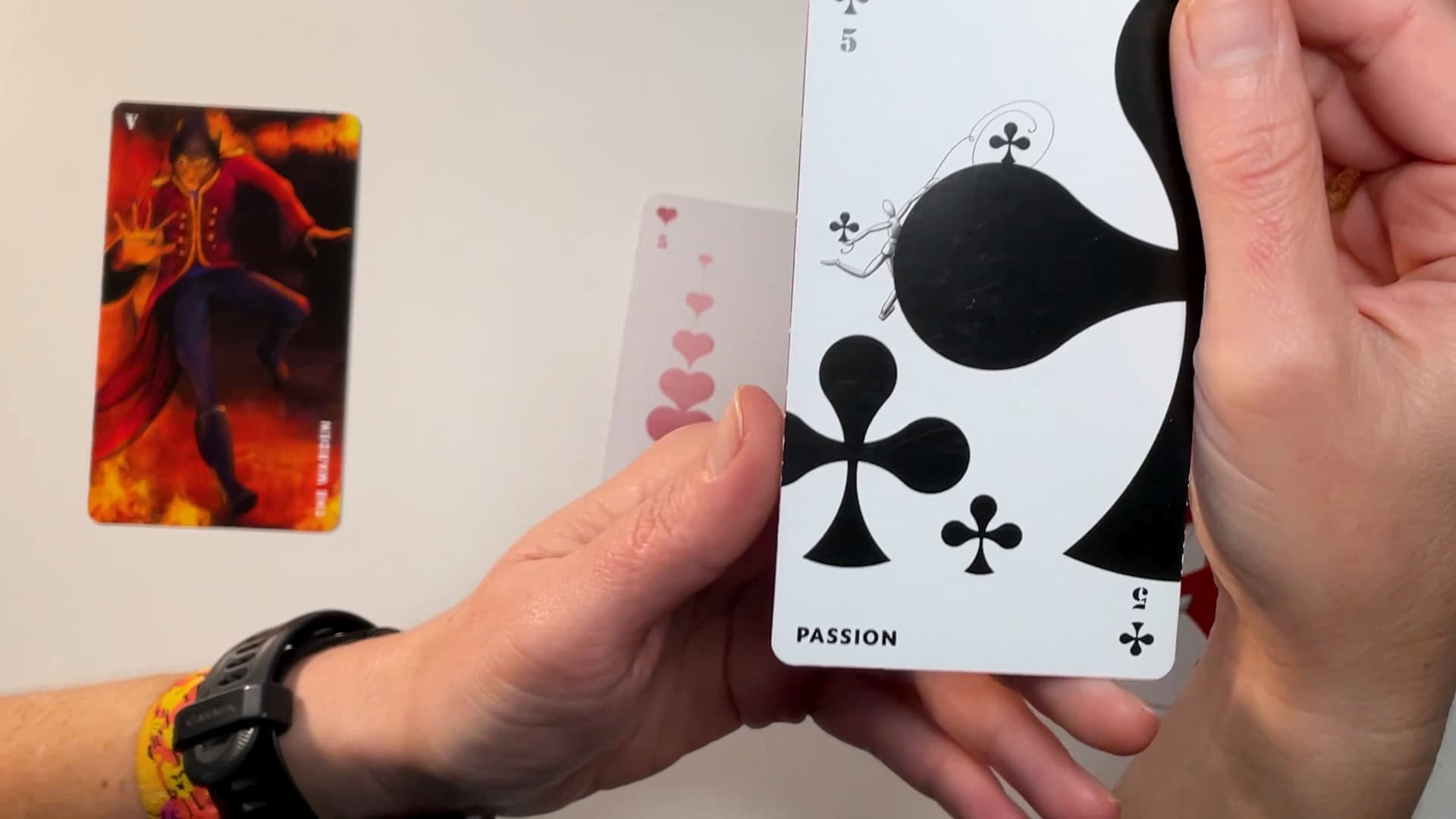
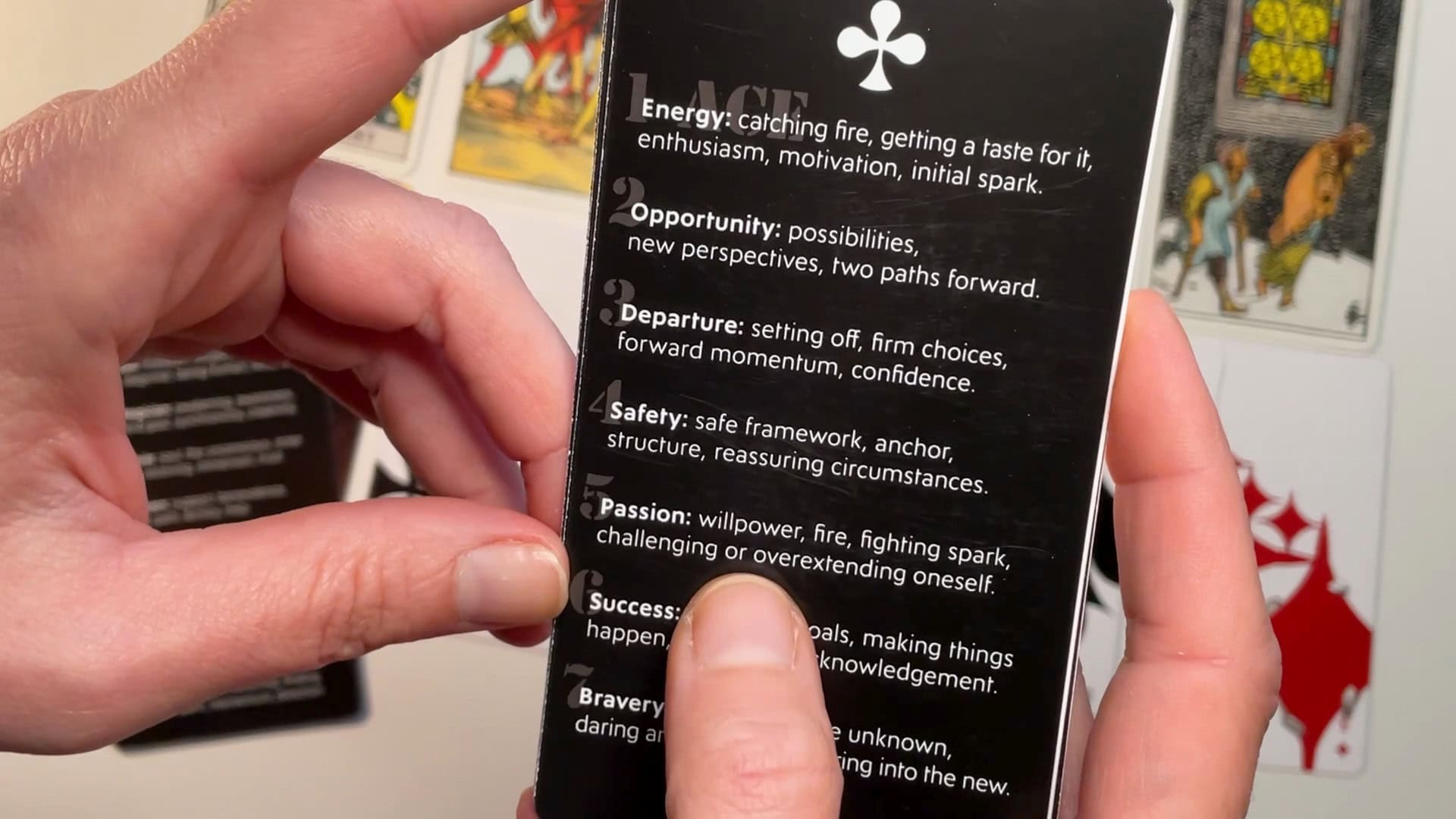
Now let’s look at the keywords:
V THE WARDEN
conflict, obstacle, threshold, initiation, trial, growth.
5 of Clubs (Wands): PASSION
willpower, fire, fighting spark, challenging or overextending oneself.
5 of Hearts (Cups): DISAPPOINTMENT
disillusionment, dead ends, powerlessness, grieving.
5 of Spades (Swords): CHAOS
losing the big picture, anxiety, fear, helplessness, lack of clarity.
5 of Diamonds (Pentacles): FEAR
hiding, walling oneself off, holding back, retreating.
The Tarot Spread of the Hierophant
Maybe you already know that the Creative Tarot comes with 22 additional cards called Stash Cards. Each of them is assigned to one number. It gives you an idea for a question to shed light on that number’s theme – and a spread to explore this question.
Why?
Because all the keywords and Tarot knowledge in the world won’t get you anywhere if you don’t ask good, helpful questions. And I think especially when we are facing a challenging situation, our default is to ask pointless questions: Why is it always me? What have I done wrong? Why is the algorithm hating me? (check out my current shorts/reels on the Fives for this one …) Why is he always doing xyz to annoy me?
Questions like these won’t get you anywhere. They’ll just keep you in the victim role of that conflicted situation. To find your way out of it you need to ask empowering questions. Something that brings you clarity and gives you an idea you can act on.
The Stash Cards are not numbered. When you are in the mood for a Tarot reading, you can just browse through the questions, pick the one that speaks to you at that moment and do the spread on the back of the card. It’s just an entry point to your conversation with the Tarot.
But the Warden’s Stash Card was designed with the situation of a conflict or hurdle in mind. The question is:
What is standing in my way?
How can I overcome it?
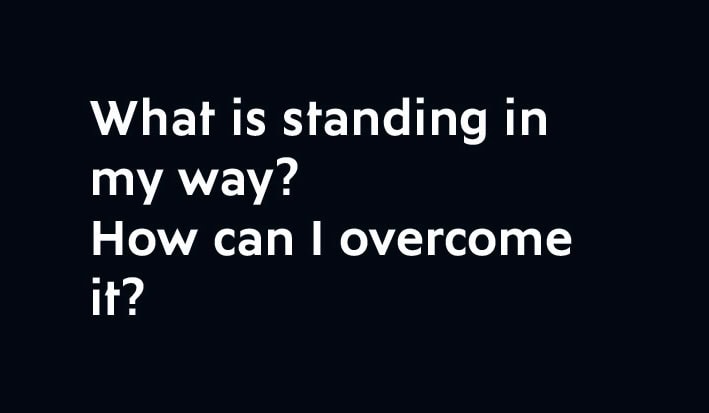
So it’s a bit more than »How can I solve the problem?«; first you check what is actually standing in your way. Is it really your boyfriend’s annoying habit or the evil algorithm’s shenanigans? Or might it be your short fuse due to some completely different circumstances or your imposter syndrome? It’s important to know who the enemy actually is before you can start the fight. Only with the next card will the Tarot layout guide you to overcoming this hurdle.
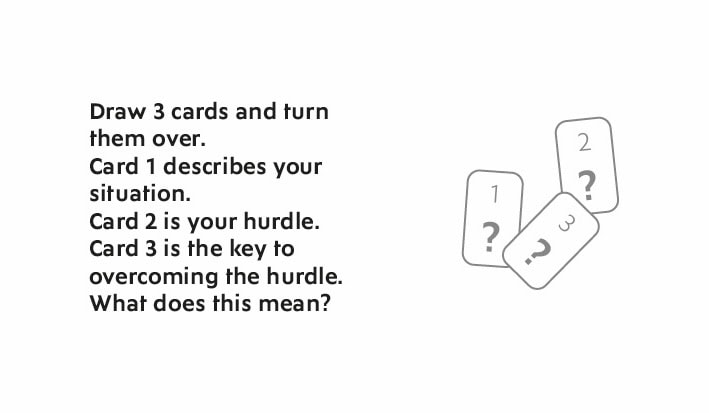
The layout is simple enough; it goes like this:
Draw 3 cards and turn them over.
Card 1 describes your situation.
Card 2 is your hurdle.
Card 3 is the key to overcoming the hurdle.
What does this mean?
Video of the spread coming soon!
You can do this reading with any Tarot deck you have. So give it a try today and leave a comment about your insights and experiences, if you like.
What’s next?
Right, I hope this blog post helped you a bit in understanding the Fives in Tarot and embracing their lessons – even if they are not the most popular Tarot cards. Their part of the story is vital for our growth and development, I can’t state it often enough. Here, at the First Threshold, there’s something to learn for us.
And after the conflict, there’s a new harmony. We’ll talk about that in the next post in this series when we look at the Sixes, the Lovers – and the Alchemist.
Until that’s published, you might want to head over to the Fool’s Tale and check out Chapter 5 in which the Fool meets the Hierophant (aka the Warden) and has to pass the First Threshold in his own Hero’s Journey.
I’d love to hear your thoughts on this interpretation of the Fives and the Hierophant! Did you find it helpful? Did it bring some clarity to your own interpretations of the conflict cards of Tarot?
Or did it raise new questions for you? Let me know in the comments!


